
Rebellion has a long history of challenging what has been accepted. Across mythology, literature, folklore, and culture, rebel figures question convention, resist established expectations, and imagine possibilities beyond the familiar.
But rebellion can also be deeply personal. There are moments when questioning the expected path has less to do with opposing something and more to do with becoming increasingly clear about what we value, what we believe, how we want to express ourselves, and how we want to live.
This is the territory of the Gentle Rebel, the archetype at the heart of Rooted & Rebellious.
The Gentle Rebel is a Soft Smile archetype—a character created to explore a particular way of moving through the world. She draws inspiration from familiar archetypal figures, but her story centers on something distinctly her own: ownership.
She pays attention to what has shaped her. She becomes curious about what she carries. She questions the things everyone else stopped questioning. She develops the discernment to choose what belongs in the life she is creating.
And she has the courage to own those choices.
Archetypal Influences: Rebel, Gardener & Sage
Several familiar archetypal figures offer a way of understanding the qualities that come together in the Gentle Rebel.
The Rebel brings the courage to question. Rebel figures appear throughout human storytelling in many forms: the outsider, the revolutionary, the rule-breaker, the person willing to challenge an established order or question assumptions everyone else has accepted.
The Rebel looks at the familiar and asks:
Why?
Who decided?
Does this still fit?
What else might be possible?
There is also something of the Gardener in the Gentle Rebel. A gardener works with what is already there. Soil has a history. Plants arrive with particular needs and tendencies. Weather changes the possibilities. Some things have been growing for years before the gardener ever arrives.
So the Gardener pays attention. She learns what flourishes. She tends what she values. She experiments. She moves something into better light. She gives another thing more room. She understands that meaningful growth often comes through sustained attention to what we choose to cultivate.
Over time, a garden becomes both inherited and created.
The Sage brings perspective and discernment. She looks beneath the obvious answer. She has enough experience to recognize complexity and enough curiosity to keep learning. She can hold an idea up to the light, turn it around, and consider whether it still makes sense from another angle.
These archetypes offer different ways of thinking about courage, cultivation, and discernment. The Gentle Rebel draws something from each, combining them in a character shaped by roots and choice, reflection and expression, belonging and independence.
The Rebel asks why.
The Sage looks more closely.
The Gardener considers what might grow here.
The Gentle Rebel chooses what she wants to make her own.
We Grow From What Has Shaped Us
By the time we begin consciously asking who we want to be, we have already been shaped by years of experience.
Families, cultures, communities, relationships, places, and experiences all leave their impressions. We learn through what people tell us, but also through what we observe and experience again and again.
Some of what we inherit is easy to recognize: recipes and holiday traditions, music and stories, familiar expressions and ways of celebrating. We may inherit values around work, family, education, spirituality, creativity, hospitality, independence, or responsibility. We may recognize in ourselves strengths we watched other people embody long before we had words for them.
Other influences are quieter. We learn what receives approval. We discover the roles that come easily to us. We develop habits of responding, relating, expressing ourselves, and moving through the world. Repeated often enough, some of these patterns simply begin to feel familiar.
Yoga philosophy offers another way of thinking about this through saṃskāras, the impressions created through our experiences, thoughts, actions, and repetition. Saṃskāras aren’t inherently good or bad. What we encounter and practice leaves traces: strengths we develop, responses that become familiar, ways of thinking we return to, and patterns that can become almost automatic. These impressions become part of the terrain from which we continue to choose.
For the Gentle Rebel, that terrain is worth knowing.
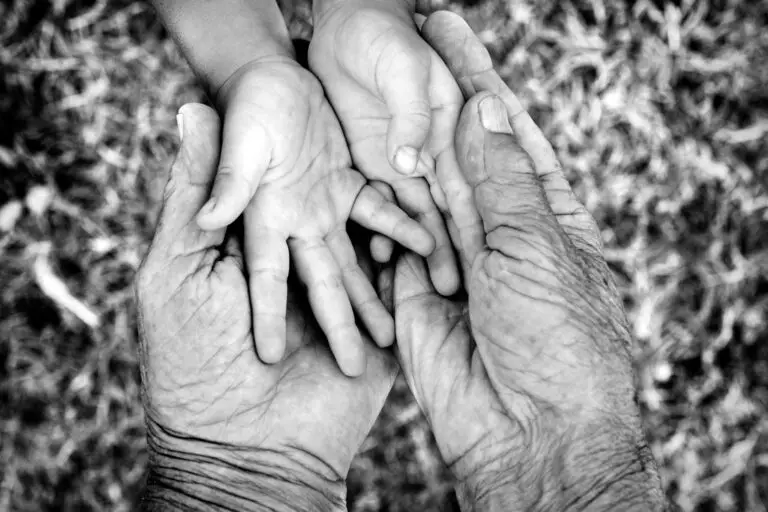
Roots tell us something about the ground from which we grew. They give us history, nourishment, complexity, and context. Perhaps a grandparent’s fierce independence is something you recognize in yourself. Maybe your family’s way of gathering around food still feels like home. You may recognize a love of books, an irreverent sense of humor, a commitment to caring for other people, a stubborn streak, a creative impulse, or a fascination with the natural world.
There may also be things you want to question, adapt, or leave behind.
The question becomes: what do we want to do with what has shaped us?
Keep it?
Change it?
Turn it sideways and see what else it can become?
Leave it behind entirely?
The Gentle Rebel doesn’t owe the past obedience. Nor does she need to reject it simply to prove her independence.
She gets to choose.
Rebellion as Ownership
This is where the Gentle Rebel’s particular kind of rebellion begins to take shape.
She isn’t defined by opposition, but she isn’t afraid of it either. She can question the rule, challenge the assumption, say no, change direction, or make the unexpected choice.
Gentle does not mean agreeable.
The Gentle Rebel can be outspoken or understated, playful or serious, conventional in one part of her life and gloriously difficult to categorize in another. Her rebellion might be a conviction spoken plainly, an unconventional choice made deliberately, or a strange fascination pursued with complete sincerity.
The question isn’t How rebellious does this look?
It is: Am I willing to own it?
Ownership begins with paying attention. What keeps drawing you back? Where does your voice become clearer? What do you care enough about to pursue, protect, or stand behind?
Noticing gives us something to experiment with.
Not every experiment reveals some hidden truth. Some are simply interesting. Others have the strange familiarity of recognition: Oh. There I am.
What do I value?
What feels distinctly mine?
What do I want to create?
What am I willing to stand behind?
This is how ownership develops: noticing, experimenting, discerning, choosing—and becoming increasingly willing to stand behind the choice.
This is the heart of Rooted & Rebellious.
Own it.
The Courage to Be Recognizable
There is courage in becoming more recognizable as ourselves.
Something changes when an internal knowing becomes visible. A thought becomes a sentence. A preference becomes a choice. A value becomes an action. An idea becomes something created. Something we care about becomes something we are willing to stand behind.
Expression allows other people to encounter us more fully.
And other people will have opinions.
That is part of what gives authentic expression its edge. The more clearly we inhabit our values, preferences, creativity, voice, and choices, the more distinctly other people can see them.
The Gentle Rebel develops a relationship with that visibility.
She becomes more discerning about whose opinions deserve influence. She notices where she wants to speak more clearly, create more freely, or stand behind a choice without immediately explaining it away.
Sometimes that means saying the thing.
Sometimes it means letting the raised eyebrow speak for itself.
Sometimes it means making the choice and getting on with it.
Self-trust grows through that practice. Not because every choice will prove to be the right one, but because we become increasingly willing to listen to our own experience, learn from it, and choose what comes next.
We choose it.
And we own it.
The Gentle Rebel Archetype
A guide who roots deeply enough to choose boldly.
She knows what she carries. She chooses what she keeps. She owns who she is.
The Gentle Rebel is rooted in where she comes from without believing that the past gets the final word. Family stories, traditions, experiences, relationships, and culture have all shaped her. Some she treasures. Some she questions. Some she takes apart and puts back together differently. She understands that inheritance and authorship can occupy the same life.
Her rebellion is owning it—and getting on with it. She stands behind what she values, what she loves, what she creates, and the life she is building. She becomes less interested in editing herself into something easier to explain and more willing to be recognizable as herself.
She asks the question everyone else stopped asking: Why? Who decided? Does this still fit? What else might be possible? She pays attention, looks more closely, experiments, and decides what she wants to make her own.
She says the thing she once edited out. She follows the idea that keeps tugging at her. She admits when she wants more. She changes direction. She pursues a strange fascination with complete sincerity. And sometimes she recognizes that something she inherited is exactly what she wants to keep.
Ownership isn’t rejection. It is being able to say: this is mine.
She doesn’t need to make a spectacle of her rebellion. She knows what matters to her, makes the choice, and stands behind it. She doesn’t need to make a case for it. She just does it.
She can love an old tradition and invent something new beside it. She can be serious about what matters and still meet the world with a raised eyebrow, an unexpected answer, or a fascination that makes perfect sense to no one but her.
Sometimes she discovers something new. Sometimes she recognizes what has been there all along. Either way, she gets curious enough to explore it and courageous enough to claim it.
She chooses it. And she owns it.