Yoga therapy offers an individualized approach to yoga for strength and balance, helping you work with your changing body while building mobility and confidence along the way. Aging well isn’t just about adding years to our lives. It’s about continuing to enjoy the things that make those years meaningful. Walking through the neighborhood, riding a bicycle, tending a garden, exploring new places, or playing with grandchildren all depend on physical abilities we may not think much about until they begin to change.
As we age, changes in muscle strength, joint mobility, balance, and coordination can make familiar activities more challenging. Getting out of a low chair may require a little more effort. A favorite walking trail might feel less predictable underfoot. Recovering from an injury or surgery may change how we move and how confident we feel doing it.
One of the greatest strengths of yoga therapy is that it can adapt to your body as you age. Whether you’re active and looking to maintain your abilities, managing joint stiffness, or returning to movement after surgery, practices can be tailored to your needs and goals. While some physical changes are a natural part of aging, strength, balance, and mobility can still be developed and improved throughout life. Yoga therapy offers a way to work with your changing body, building strength, stability, and confidence along the way.
Yoga Therapy Is Adapted To You
Yoga can take many forms, from physically challenging standing postures to gentle movements practiced in a chair. A person might use a wall for balance, blocks to make a posture more accessible, or blankets and bolsters for restorative support. Even familiar yoga postures can be modified by changing the position, range of motion, or amount of effort involved.
Yoga therapy takes this adaptability a step further through an individualized, goal-oriented approach. A yoga therapist considers a person’s health history, physical abilities, current challenges, and everyday activities to develop practices that support their particular needs. Someone who enjoys walking and cycling might focus on leg strength, hip mobility, and balance, while someone managing arthritis may benefit from joint-friendly movement and gradual strengthening.
This approach also considers the broader factors that influence wellbeing. Movement and postures can be combined with breathing practices, body awareness, and relaxation to support coordination, recovery, and comfort. As strength improves, mobility changes, or new goals emerge, the practice can evolve too.
Yoga therapy focuses on developing the abilities that matter in everyday life, whether that’s feeling steadier on your feet, moving more comfortably, or maintaining the strength to continue doing the things you enjoy.
Strength, Balance & Mobility: Working Together for Healthy Aging
Strength, balance, and mobility are closely connected. Each contributes to our ability to move comfortably and confidently, and changes in one can influence the others.
Strength: Supporting the Activities of Everyday Life
Yoga therapy can build strength through familiar yoga postures that engage particular muscle groups and provide an appropriate level of challenge. For example:
- Warrior II: With one knee bent, the legs supporting the body, and the arms extended outward, this posture engages muscles in the thighs, hips, shoulders, and trunk. Shortening the stance, reducing the bend in the knee, or using a chair for support can make it more accessible.
- Bridge Pose: Practiced lying on the back with knees bent, Bridge Pose engages the hips and glutes, helping develop strength that supports walking, climbing stairs, and rising from a seated position.
- Chair Pose: Bending the knees and hips as though preparing to sit engages the thighs, hips, and trunk. A shallow knee bend, wall support, or an actual chair can make the movement more accessible.
Holding postures, moving slowly between them, or gradually increasing the challenge can help develop strength and muscular endurance over time.
Maintaining strength becomes increasingly important as we age. We may experience a gradual decline in muscle mass and strength, particularly when physical activity decreases. More significant age-related muscle loss and weakness, known as sarcopenia, can affect walking speed, endurance, and everyday activities such as climbing stairs or carrying groceries.
Strong muscles also support our joints, contribute to posture and stability, and make daily activities less physically demanding. Strengthening the legs and hips can make walking, cycling, and navigating stairs easier, while developing trunk strength can support reaching, carrying, bending, and changing positions.
Yoga therapy can complement other forms of exercise, too. Resistance training with weights, bands, or other equipment is particularly valuable for preserving muscle strength and supporting bone health as we age. Combining yoga therapy with appropriate resistance and cardiovascular exercise can provide a well-rounded approach to maintaining physical function.
Balance: Finding Stability in a Changing World
Yoga therapy can help develop balance through postures and movements that challenge stability while building strength, coordination, and body awareness. These practices can begin with substantial support and progress as an individual’s abilities improve.
Some examples include:
- Tree Pose: Standing on one leg while placing the opposite foot against the ankle or inner leg challenges stability and body awareness. Keeping the toes of the lifted foot on the floor or using a wall or chair for support provides a more accessible variation.
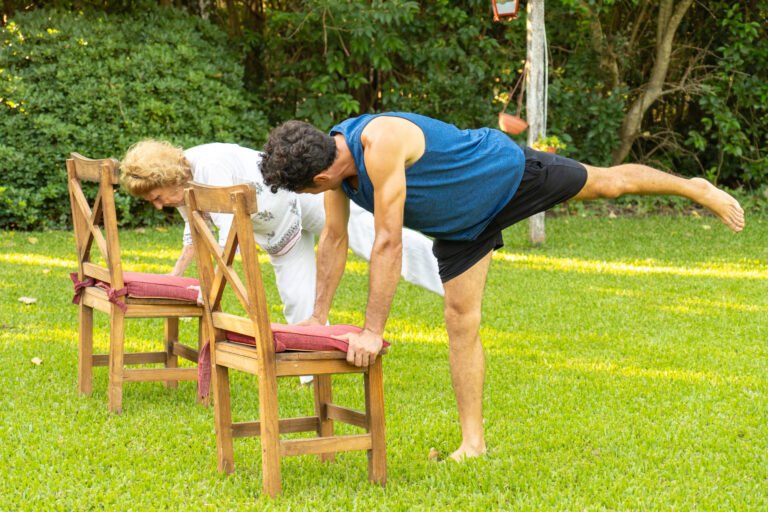
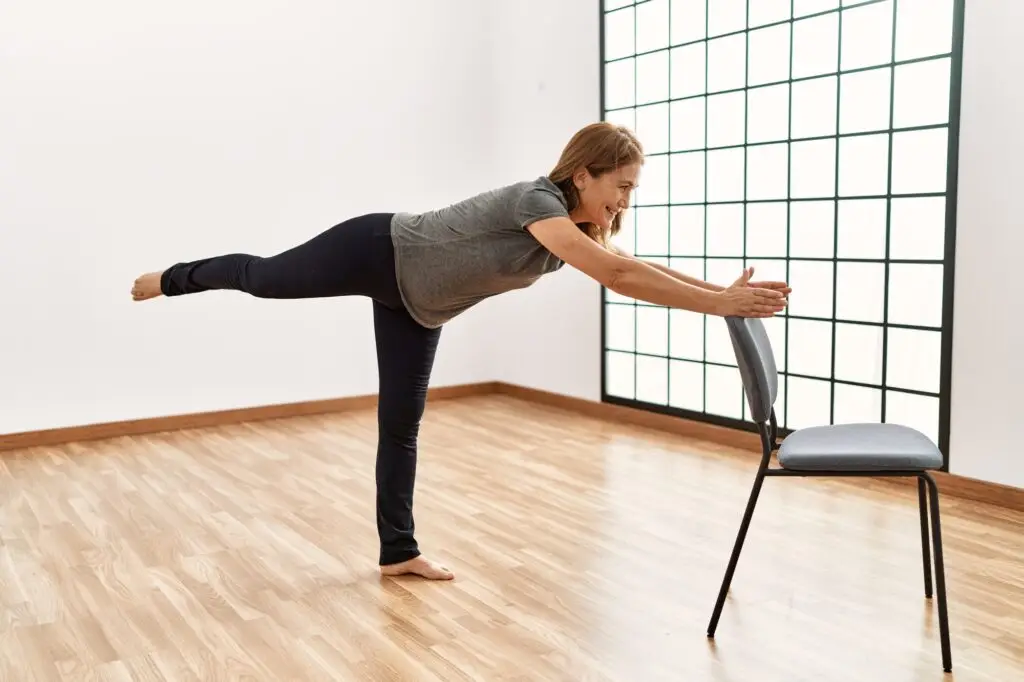
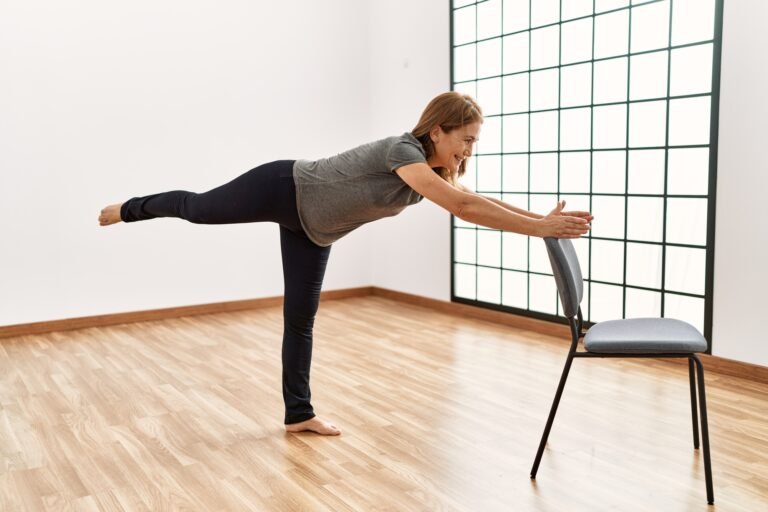
- Warrior III: Shifting weight onto one leg while extending the other behind the body develops balance and strength through the hips and trunk. Resting the hands on a chair or countertop provides additional stability.
- Supported weight shifts and heel raises: Slowly shifting weight between the feet or rising onto the balls of the feet can help develop the strength and control needed for steady movement.
Balance involves much more than the ability to stand on one foot. It depends on communication between the nervous system, muscles, joints, vision, and the vestibular system of the inner ear. Proprioception, our awareness of where the body is positioned in space, also plays an important role. Together, these systems help us remain stable while standing and make continuous adjustments as we walk, turn, reach, or navigate obstacles.
Combining physical movement with attention to posture, weight distribution, and sensation brings a somatic dimension to yoga therapy. This awareness helps individuals recognize how their bodies respond to changes in position and make subtle adjustments as they move. Practices may gradually introduce new challenges, such as narrowing the stance, changing direction, or reducing reliance on support when appropriate.
Balance becomes particularly relevant during winter, when icy sidewalks, snow-covered paths, and uneven surfaces can make everyday activities more challenging. Although yoga therapy cannot eliminate the risk of falling, appropriately designed balance and strengthening practices can contribute to physical function and stability. For older adults at increased risk of falls, these practices can complement a broader prevention strategy that may include physical therapy, vision care, medication review, and home safety measures.
Mobility: Moving With Comfort and Control
Yoga therapy can support mobility through adapted postures and gentle, controlled movements that encourage joints to move through comfortable ranges of motion. Practices may focus on specific areas of the body or movement patterns that help with everyday activities.
For example:
- Cat-Cow: Alternating between rounding and gently extending the spine helps maintain movement through the back and pelvis. This can be practiced on hands and knees or adapted to a seated position.
- Gentle spinal twists: Seated or supported twists can encourage rotational movement through the upper back, supporting activities such as turning to look behind us.
- Adapted Low Lunges: These postures can encourage hip mobility while engaging muscles that help stabilize the pelvis. Chairs, blocks, or other props can provide support and accommodate individual limitations.
These movements can be practiced dynamically, moving gently in and out of a posture, to develop both range of motion and control.
Although flexibility and mobility are often used interchangeably, they aren’t quite the same thing. Flexibility generally refers to how much a muscle or other soft tissue can lengthen, while mobility involves the ability to move a joint through a useful range of motion with adequate control. Greater flexibility isn’t always the goal. What’s important is having enough mobility to turn our heads while driving, reach overhead, step into a bathtub, or bend down to retrieve something from the floor.
Mobility also depends on strength and stability. Being able to move a joint through a particular range is only part of the picture; we also need the muscular control to use that movement comfortably and safely. Combining gentle stretching with active movement and strengthening helps develop mobility that supports everyday activities.
For people experiencing arthritis, joint stiffness, or changes in movement following injury or surgery, practices can be modified to respect physical limitations and support gradual progress. Following surgery, yoga therapy may eventually complement rehabilitation and long-term movement goals, provided appropriate medical guidance and precautions are followed.
How Yoga Therapy Adapts to You
Yoga therapy begins with the person rather than expecting the person to adapt to the practice. Consider three people who all want to improve their strength, balance, and mobility:
- An active adult who enjoys walking and cycling might focus on hip and leg strength, single-leg stability, spinal mobility, and coordination. Their practice could include standing postures, controlled transitions, and progressively more challenging balance work.
- Someone living with arthritis might benefit from gentle joint movements, supported postures, and carefully paced strengthening exercises that account for stiffness, discomfort, and fluctuations in symptoms. Their practice may change from day to day, with more active movement when appropriate and restorative approaches when additional recovery is needed.
- A person returning to activity after hip surgery may have different priorities. Depending on their stage of recovery and medical guidance, practices might focus on safe movement patterns, appropriate strengthening, and rebuilding confidence. Coordination with their healthcare team helps ensure that yoga therapy complements rehabilitation.
Beyond muscles and joints, pain, poor sleep, stress, and fatigue can also influence physical wellbeing. Breath awareness, Yoga Nidra, and restorative practices may complement movement by supporting relaxation, rest, and recovery.
The Connection Between Movement and Confidence
Regaining confidence in movement can be just as meaningful as improving strength, balance, or mobility. A person who has experienced a fall may become hesitant to walk outdoors, while someone recovering from surgery might feel uncertain about particular movements, even after receiving medical clearance. Others may gradually stop participating in activities they enjoy because of concerns about pain, instability, or injury.
An individualized yoga therapy practice can help people gradually rebuild both physical capacity and confidence. Someone who feels unsteady might begin with simple movements using stable support, then gradually explore more challenging positions as strength and balance improve. Each successful experience provides an opportunity to recognize progress, develop greater trust in their abilities, and approach familiar activities with more confidence.
Body awareness is another important part of this process. Yoga encourages attention to physical sensations, breathing, posture, and the experience of movement. Through this mindful approach, individuals can become more familiar with how their bodies respond to different activities, recognize when adjustments are needed, and develop a greater sense of control over their movements.
Confidence and physical activity can influence one another. While caution is sometimes appropriate and protective, avoiding movement out of fear can contribute to further losses in strength, endurance, and mobility. Over time, reduced physical capacity may reinforce the concerns that led someone to limit their activities.
By combining appropriately challenging movement with individualized adaptations and body awareness, yoga therapy can support a gradual return to activities that may have begun to feel intimidating. The goal is to develop the abilities and confidence needed to move through everyday life with greater ease while respecting reasonable limits.
Supporting Strength, Balance & Mobility at Every Age
Healthy aging doesn’t depend on one particular exercise or movement tradition. Walking, cycling, swimming, resistance training, yoga, and other forms of physical activity all contribute to wellbeing in different ways. A well-rounded approach includes opportunities to build strength, challenge balance, maintain mobility, support cardiovascular health, and allow time for recovery.
Yoga therapy can complement these activities through a personalized practice that evolves with our changing needs. Some days we may benefit from strengthening and more challenging movement, while on others, gentle mobility, restorative practices, or additional rest may be more appropriate. Consistency matters, but so does adaptation.
There’s no single picture of what aging well should look like. For one person, it might mean continuing to explore hiking trails or enjoying long bicycle rides. For another, it might mean returning to gardening after surgery, feeling steadier on winter sidewalks, or moving comfortably through daily routines. Strength, balance, and mobility aren’t ends in themselves. They’re capacities that help us remain engaged with the people, places, and activities we care about.
Aging well doesn’t look the same for everyone, and neither should our approach to movement. Yoga therapy can adapt as our bodies, abilities, and priorities change, helping us continue developing the strength, balance, and mobility to participate in the lives we want to live.