
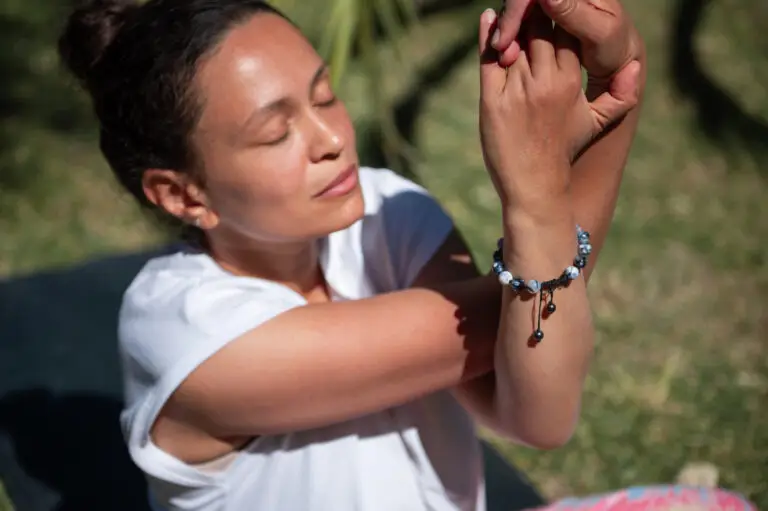
Stress often becomes visible in the body long before we consciously recognize it. Shoulders gradually rise toward the ears, breathing becomes shallow, sleep feels less restorative, and it becomes increasingly difficult to shift out of “doing” mode—even when there is finally time to rest.
Because stress is experienced throughout the body, it isn’t surprising that many approaches to stress relief work with the body as well. Alongside psychotherapy, medication, exercise, and other forms of healthcare, interest in mind-body practices has grown steadily over the past several decades.
Today, there are more options than ever before. Somatic practices. Sound meditation. Healing Touch. Yoga. Breathwork. Mindfulness. Some have been studied extensively, while others are still emerging areas of research. Rather than competing with one another, these practices offer different ways of working with stress. Each invites attention in a slightly different direction, and each may resonate with different people.
If you’ve ever wondered where to begin, consider this a gentle introduction to a few of the many possibilities.
Beginning with the Body: Movement & Somatics
Have you ever noticed yourself holding your breath while answering email?
Stress often becomes visible in the body before we consciously recognize it. Shoulders gradually rise toward the ears, the jaw tightens, breathing becomes shallow, or movement becomes rushed. These responses are so familiar that they often fade into the background of daily life until someone gently invites us to notice them. Many mind-body practices begin with this simple act of awareness—not because noticing alone solves stress, but because awareness often becomes the first step toward responding differently.
This is one reason somatic practices have attracted growing interest in recent years. The word somatic simply refers to the body as it is experienced from within. Rather than focusing primarily on thoughts, somatic approaches encourage awareness of physical sensations, posture, movement, balance, and internal experience. Researchers often describe this awareness as interoception—our ability to notice what is happening inside the body—which has been associated with emotional awareness and self-regulation (Mehling et al., 2012).
Yoga is perhaps the best-known example of a mind-body practice that incorporates many somatic principles. Through movement, posture, breath, and attention, yoga has been associated with improvements in stress, anxiety, sleep, and overall well-being across a wide range of populations (Cramer et al., 2017). Other somatic approaches may place less emphasis on structured postures and more on gentle movement, sensory awareness, or exploring how the body naturally responds to different experiences.
For many people, beginning with the body feels more approachable than trying to quiet the mind directly. Movement offers something tangible to notice, making awareness itself feel a little more accessible.
The Experience of Sound: Singing Bowls & Sound Meditation
Think about the last time a favorite piece of music changed your mood.
Most of us have experienced this without giving it much thought. We play calming music after a stressful day, listen to rain sounds while falling asleep, or find ourselves humming almost instinctively. Across cultures and throughout history, sound has been used to celebrate, mourn, soothe, and bring people together. Long before sound baths and singing bowls became familiar in wellness spaces, people understood that sound could influence how an experience felt.
Sound meditation builds on this simple idea by inviting listening to become the practice itself. Whether using crystal singing bowls, Himalayan bowls, chanting, humming, or other forms of intentional sound, the goal is not to stop thinking. Instead, sound provides a gentle place for attention to return whenever the mind begins to wander.
Research on sound-based practices is still emerging, but early studies suggest that sound meditation may reduce perceived stress, tension, and negative mood while promoting relaxation and positive emotional states (Goldsby et al., 2017). Although much remains to be studied, many people find that listening feels surprisingly accessible. Rather than asking us to do more, sound invites us to receive.
The Language of the Senses: Touch, Healing Touch, & Sensory Regulation
Think about the last time someone gave you a hug after a difficult day. Why does that simple gesture often feel so different from hearing, “Everything will be okay”?
Human beings experience the world through their senses. Long before we understand language, we respond to warmth, touch, sound, movement, and the environment around us. Throughout life, these sensory experiences continue to shape how we experience comfort, safety, and stress.
This is one reason many mind-body practices work through the senses rather than through thoughts alone. A reassuring touch, the gentle pressure of a weighted blanket, an acupressure point, a warm bath, or the simple act of massaging tired hands after a long day all change the sensory information we receive from our bodies and our surroundings. While these experiences cannot remove the source of stress, they may influence how stress is experienced.
Researchers continue to explore how sensory-based approaches support nervous system regulation and emotional well-being. Practices such as Healing Touch have been studied in hospitals and clinical settings, while newer approaches like Havening Techniques® are attracting growing research interest. Although the evidence base remains smaller than for practices such as yoga or meditation, these approaches highlight an important idea: stress is not only something we think about. It is also something we feel, sense, and experience through the body.
Perhaps this is why touch can communicate something words sometimes cannot. Rather than asking us to analyze our experience, sensory practices invite us to experience it differently. For some people, that becomes another gentle doorway into stress relief.
Breath & Attention: Foundations of Stress Relief
If you’ve noticed breathing and attention appearing throughout this article, you’re not imagining it.
They are woven through nearly every mind-body practice discussed so far.
Movement naturally changes the breath. Sound gives the mind a place to rest. Touch often encourages the body to soften. Even without trying to meditate, many of these experiences gently cultivate present-moment awareness.
Breathing occupies a unique place within human physiology because it happens automatically while also remaining available to conscious influence. This makes it one of the most accessible ways of working with the stress response. Research has linked slower, more intentional breathing with changes in autonomic nervous system activity, increased parasympathetic activation, and improvements in heart rate variability—physiological changes associated with rest and recovery.
Likewise, meditation is often less about “emptying the mind” and more about repeatedly returning attention to a chosen point of focus. Sometimes that focus is the breath. Sometimes it is movement, sound, bodily sensation, or even the simple experience of being present.
Rather than belonging to a single modality, breath and attention become common threads that weave through many different approaches to stress management. They are less a destination than a way of relating to whatever practice we choose.
Finding a Place to Begin
One of the encouraging aspects of mind-body practice is that there is no single doorway into this work.
Some people discover that movement helps them reconnect with themselves after a stressful day. Others are surprised by how calming sound meditation feels, or find that therapeutic touch offers a sense of comfort they hadn’t expected. Still others begin with a few slow breaths, gradually discovering that paying attention in this way influences far more than breathing alone.
As research continues to evolve, our understanding of these practices will continue to deepen. Some currently have stronger evidence than others, and no single approach is appropriate for every person or every situation. Yet together they remind us of something important: stress is not experienced only in the mind, and it often responds best when we include the body in the conversation.
Perhaps the best place to begin is not with the question, Which practice is best? but Which one makes me curious enough to explore a little further?
References
Cramer, H., et al. (2017). Yoga for improving health-related quality of life, mental health, and chronic disease outcomes.
Goldsby, T. L., Goldsby, M. E., McWalters, M., & Mills, P. J. (2017). Effects of singing bowl sound meditation on mood, tension, and well-being.
Mehling, W. E., et al. (2012). The Multidimensional Assessment of Interoceptive Awareness (MAIA). PLoS ONE.