Yoga Therapy for Nervous System Regulation, Stress Recovery, and Creative Expression
Healing Touch
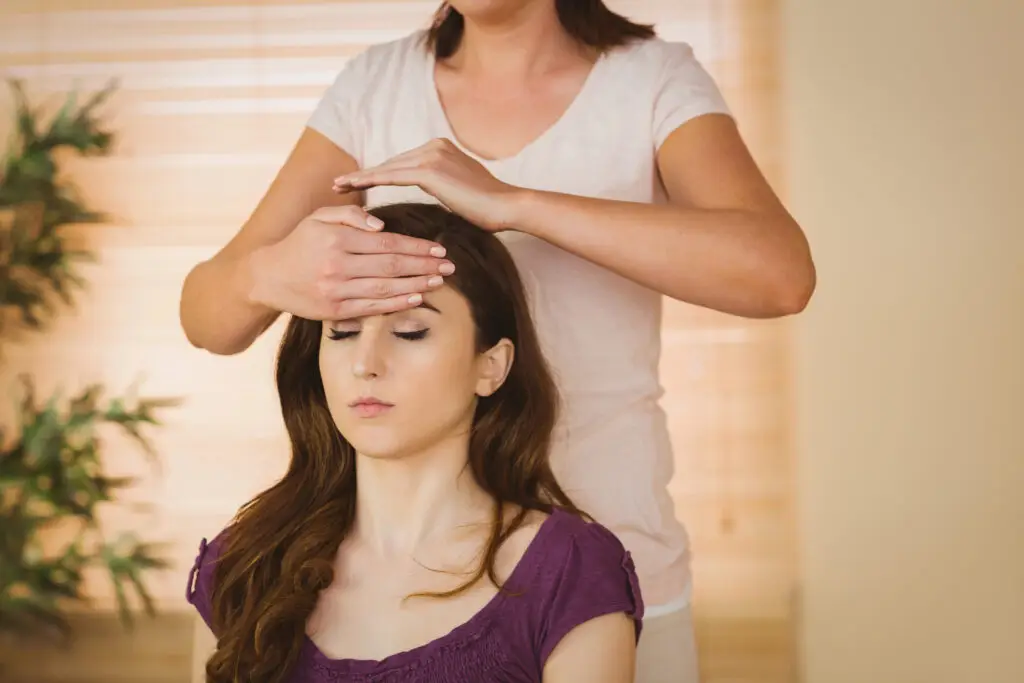
A gentle approach to relaxation and nervous system regulation.
Healing Touch is a gentle, energy-based technique that uses light touch or hands held just above the body to support relaxation and balance in the body’s energy system. It can be incorporated into a personalized Mind-Body Session to encourage deep rest, nervous system regulation, and a greater sense of balance.
Healing Touch is always offered with your comfort and preferences in mind and may include gentle touch or hands held just above the body.
Healing Touch is one of several practices that may be incorporated into a personalized Mind-Body Session. Depending on your goals and preferences, your session may focus primarily on Healing Touch or thoughtfully integrate it alongside embodied movement, breathwork, meditation, Yoga Nidra, sound, sensory experiences, or other complementary mind-body practices.
Every Mind-Body Session begins with you.
We’ll begin with a brief conversation about what brought you here and tailor the session to your goals and preferences.
- Online or in a Private studio in the St. Michael–Albertville, MN area
- Select in-home sessions available within 50 miles of St. Michael–Albertville, MN
What Healing Touch Can Support
Your session may focus entirely on Healing Touch or blend it with other complementary mind-body approaches, depending on your goals and preferences.
Healing Touch supports relaxation, nervous system regulation, and overall well-being. It is commonly used as a complementary practice alongside medical, mental health, and wellness care.
It may be supportive for:
- Stress and overwhelm
- Anxiety and emotional tension
- Grief and loss
- Fatigue and burnout
- Relaxation and restorative care
- Recovery and healing support
- A desire for greater balance and well-being
Many people leave with:
- A deep sense of relaxation
- A greater sense of ease and connection
- A feeling of rest and restoration
What to Expect
Each Mind-Body Session begins with a brief conversation about your goals, questions, and any health considerations that may influence your experience.
Depending on your intentions, your session may include Healing Touch techniques using light touch or hands held just above the body. You’ll rest comfortably on a massage table, in a chair, or on the floor, remaining fully clothed throughout the experience. Every aspect of the session is guided by your comfort and preferences.
No prior experience is necessary.
Why Healing Touch?
Healing Touch creates space for quiet rest, allowing the body and mind an opportunity to settle without needing to “do” anything. Many people appreciate its gentle, restorative nature and choose to include it as part of a personalized Mind-Body Session alongside practices such as breathwork, meditation, Yoga Nidra, or sound.
Healing Touch & Reiki
Healing Touch and Reiki are both gentle, energy-based practices that support relaxation and overall well-being. While they share similarities, they developed through different traditions and have distinct approaches.
Reiki originated in Japan in the early 1900s and is typically practiced using a specific lineage of teachings and attunements. Healing Touch was developed later by nurses and other healthcare professionals and is widely used in hospitals, hospice programs, and integrative healthcare settings. It draws from multiple healing traditions and includes a broader range of techniques.
At Soft Smile Somatics, Healing Touch is offered as a gentle, complementary practice that can be incorporated into a personalized Mind-Body Session. The focus is not on diagnosing or treating illness, but on creating an environment that supports relaxation, nervous system regulation, and your body’s natural capacity for healing.
What the Research Says
Healing Touch has been studied in a variety of healthcare settings, including research involving stress reduction, anxiety, pain, cancer care, post-operative recovery, cardiovascular health, palliative care, and overall quality of life. Research continues to evolve, and organizations such as Healing Beyond Borders maintain a growing collection of Healing Touch research and evidence summaries.
Current evidence suggests Healing Touch may support relaxation, reduce stress, and improve aspects of comfort and well-being for some individuals. While additional high-quality research continues to strengthen our understanding, Healing Touch is widely used as a complementary practice alongside conventional medical and mental health care.
Healing Touch is intended to support relaxation and well-being and is not a substitute for medical or mental health treatment.
Explore Other Mind-Body Practices
Healing Touch is one of several practices that may be included in a personalized Mind-Body Session. Depending on your goals, your experience may also incorporate breathwork, meditation, Yoga Nidra, gentle movement, sound, sensory experiences, philosophy, or other evidence-informed mind-body approaches.
Ready to Get Started?
If this approach resonates with you, a Mind-Body Session is a wonderful place to begin. Together, we’ll create an experience that supports your goals, preferences, and what you need most today.