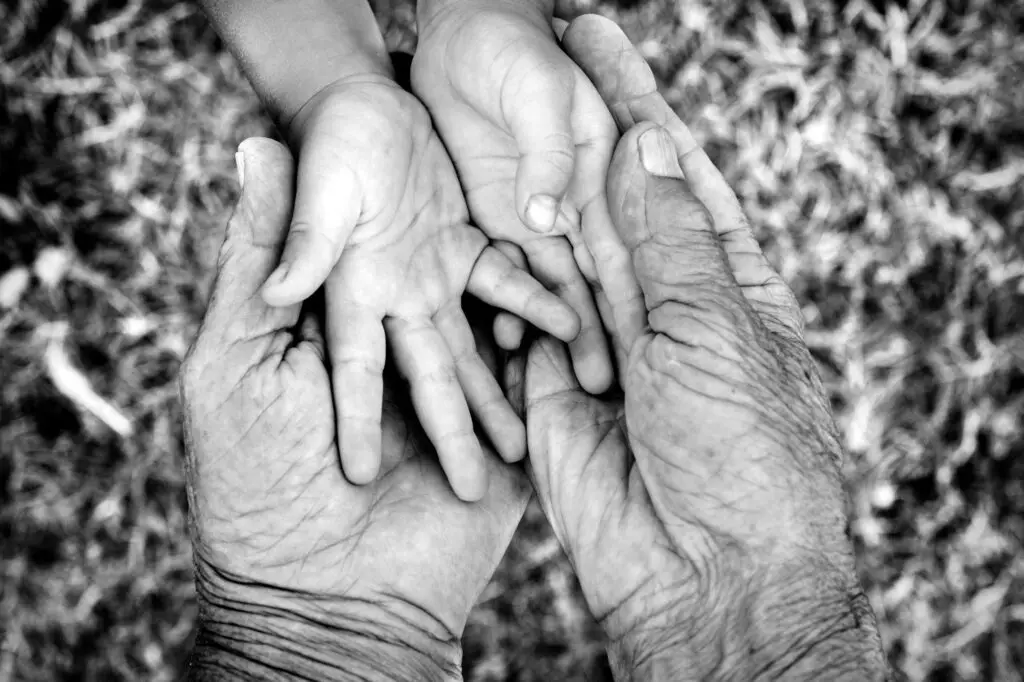
Some families have stories everyone loves to tell.
There is the grandmother who was always impeccably dressed, even when everyone else was wearing jeans. The vacation mishap that somehow becomes funnier with every retelling. A recipe that appears at every holiday, a song forever associated with one particular person, a photograph that can send everyone around the table into another round of stories.
These memories become part of how we know where we came from.
And then there are the stories families don’t tell.
In some families, there may be an estrangement no one quite explains, a loss that changed everything, or a period of hardship people learned not to discuss. There may be experiences of migration, war, discrimination, poverty, addiction, violence, or other upheaval. Sometimes later generations know exactly what happened. Sometimes they have fragments—a name, an old photograph, a few sentences overheard as a child. Sometimes they simply know there are parts of the story they will never know.
We arrive in the midst of all of it: the stories told with laughter and the long silences, the traditions people lovingly preserve and the ones that disappear, the strengths families proudly claim and the experiences they would rather forget.
This complicated relationship between what came before and how we live now is part of the territory people are exploring when they talk about ancestral healing.
What Is Ancestral Healing?
Ancestral healing doesn’t have one universally agreed-upon definition. The term appears in contemporary spiritual, wellness, and therapeutic conversations, sometimes referring to very different ideas and practices.
Broadly, ancestral healing can describe an effort to understand, reconnect with, or change our relationship with what has traveled across generations. For one person, that might mean becoming curious about family patterns or intergenerational trauma. For another, it might involve reconnecting with a cultural tradition that was lost or interrupted. It might include grief, remembrance, spirituality, family stories, or a desire to better understand the people and circumstances that shaped the world we inherited.
Increasingly, ancestral healing is also discussed in relation to ancestral trauma: the possibility that painful experiences from previous generations can continue to influence people who came later.
But healing does not have to mean fixing the past.
We cannot change what happened generations ago. We may not even know what happened. A family tree can contain enormous blank spaces, conflicting stories, relationships that disappeared from the record, and people whose experiences were never written down.
Nor is ancestral healing a single clinical treatment, and yoga cannot diagnose what happened to an ancestor. We don’t need to excavate a hidden ancestral cause for everything difficult in our lives.
Perhaps a more useful question is not How do I fix the past?
It is How am I relating to what came before me now?
That leaves room for pain and loss. It also leaves room for something that can disappear when conversations about ancestry become focused entirely on trauma: strength.
Remembering Those Who Came Before Us
The phrase ancestral healing may belong largely to contemporary conversations, but the human impulse to remember and maintain relationships with those who came before us is much older.
Those relationships can be extraordinarily vivid.
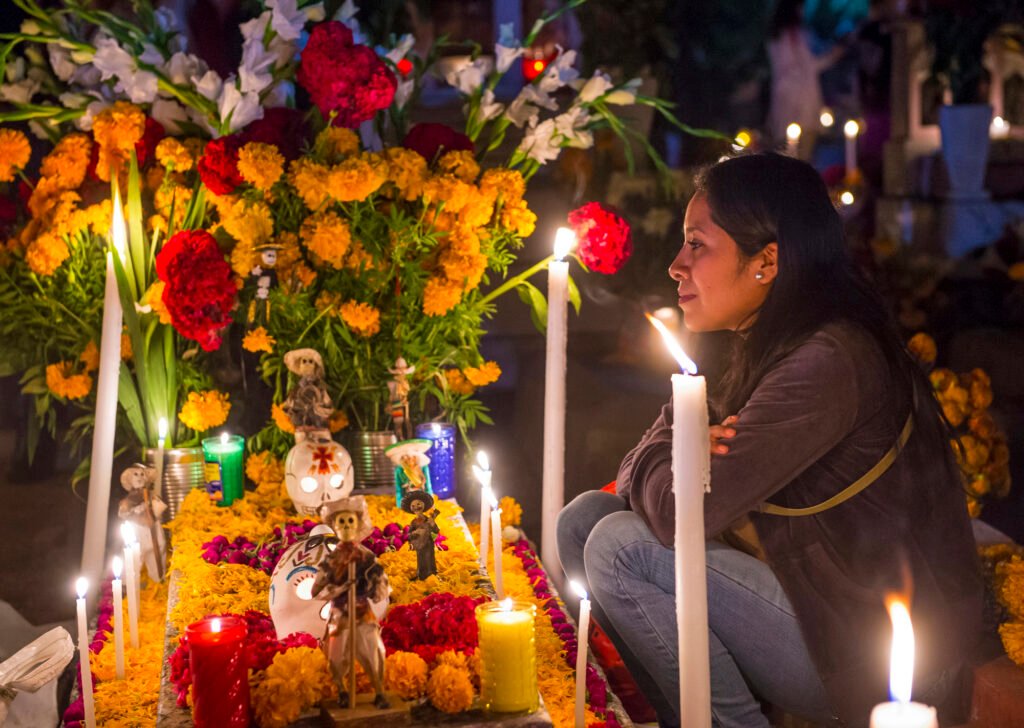
During Mexico’s Día de los Muertos, brilliant orange marigolds may surround an ofrenda filled with photographs, candles, favorite foods, and objects associated with loved ones who have died. Remembrance takes shape through color, scent, food, art, storytelling, and gathering. The Smithsonian describes the ofrenda as a central part of the observance, created to honor and welcome deceased loved ones.
In Japanese Buddhist traditions, Obon offers a different expression of remembrance. Families and communities gather to honor those who have died, and observances may include visits to graves, memorial services, lanterns, and bon odori, communal dancing. In Japanese American communities, Obon has also become a way of sustaining cultural connection across generations. A Smithsonian account of Obon in Los Angeles describes children, teenagers, adults, and elders dancing together—honoring those who came before while strengthening relationships among those who are here now.
These traditions shouldn’t be flattened into one universal practice called ancestral healing. Each arises from its own history, culture, beliefs, and relationships. But together they remind us that contemporary interest in ancestry did not invent the desire to remain connected with those who came before.
Human beings have found remarkably vivid ways of remembering the dead—and of bringing memory into the lives of the living.
How Trauma Travels Across Generations
For many people, the path into ancestral healing begins with a harder question: Can experiences that happened before I was born still affect me?
They can, although the mechanisms are more complex than popular phrases like trauma is in your DNA sometimes suggest.
How Intergenerational Trauma Shapes the Present
Intergenerational trauma describes ways the effects of traumatic experiences in one generation can affect subsequent generations, even when those descendants did not experience the original event themselves.
Someone who has lived through war, violence, forced displacement, profound deprivation, discrimination, or another traumatic experience may understandably develop particular ways of thinking about safety, trust, scarcity, relationships, or uncertainty. Those experiences can influence caregiving, family relationships, expectations, what gets talked about, and what everyone learns not to mention.
Material circumstances can travel across generations too. Economic instability doesn’t disappear simply because a generation changes. Neither do discrimination, disrupted communities, loss of cultural resources, or the consequences of displacement.
In other words, the past can reach the present through relationships and behavior, stories and silence, culture and community, social conditions, and the environments in which later generations continue to live.
For readers interested in exploring intergenerational trauma healing more deeply, psychologist Mariel Buqué’s Break the Cycle: A Guide to Healing Intergenerational Trauma is an accessible resource devoted specifically to recognizing inherited patterns and exploring how we might relate to them differently.
What About Epigenetics and Generational Trauma?
This is where the science becomes especially interesting, and where a little restraint is useful.
Epigenetics examines changes that affect how genes are expressed without changing the underlying DNA sequence. Researchers have investigated whether severe stress and trauma in one generation might be associated with epigenetic differences in later generations.
There are intriguing findings, but human epigenetics and generational trauma research is still developing. A 2023 scoping review found preliminary evidence of DNA methylation differences among offspring of parents exposed to trauma or severe stress, while also emphasizing that the role of epigenetic mechanisms in human intergenerational trauma remains under debate.
So epigenetics belongs in the conversation. But the popular idea that an ancestor’s trauma is simply “stored in your DNA” goes well beyond what the research currently establishes.
Collective Trauma Extends Beyond the Family
Collective trauma gives us another lens.
Where intergenerational trauma focuses on effects that extend from one generation into another, collective trauma concerns traumatic experiences that affect groups, communities, or populations. War, forced displacement, genocide, enslavement, colonization, systemic oppression, and large-scale disasters can alter not only individual lives but communities, institutions, cultural practices, access to resources, and collective narratives.
Intergenerational trauma and collective trauma can intersect, but they aren’t interchangeable.
Not everything we inherit can be understood by looking only at what happened inside a family. Sometimes the larger world changed around a family. Communities were disrupted. Opportunities disappeared. People adapted to circumstances they did not choose.
Those adaptations can become part of what later generations inherit too.
Strength Can Travel Across Generations, Too
Trauma is not the only thing capable of traveling across generations.
People crossed oceans and borders and learned how to build lives in unfamiliar places. People rebuilt after war and upheaval. They learned new languages and fought to preserve old ones. They made meals from what was available and somehow turned those meals into traditions.
They made music and art. They cared for children and elders. They practiced their faith, protected one another, formed communities, celebrated birthdays, fell in love, made jokes, planted gardens, taught, protested, invented, adapted, and began again.
A strengths-based view of ancestry doesn’t deny trauma or turn suffering into an inspirational story. It simply refuses to treat suffering as the only meaningful thing previous generations passed forward.
The same histories that contain loss may also contain extraordinary evidence of adaptability, ingenuity, courage, creativity, persistence, knowledge, humor, relationship, resistance, and care.
And those strengths don’t necessarily exist only as stories about heroic people in the distant past. They may continue through living relationships, cultural practices, communities, values, skills, art, food, spirituality, and ways of caring for one another.
Strength itself can also be complicated.
Imagine a family in which fierce self-reliance developed during a period when people genuinely could not depend on outside help. That independence may have been protective. It may have helped people survive.
Generations later, the same family value could make it difficult for someone to ask for help when help is readily available.
Vigilance can protect. Silence can protect. Keeping your head down can protect. Working relentlessly can protect.
And circumstances can change.
This is one reason why a strengths-based approach to ancestral trauma and healing is so compelling. It gives us questions more interesting than Was this inheritance good or bad?
We can ask:
What did this way of being make possible then?
And:
What does it make possible — or hinder — now?
What Yoga Adds to Ancestral Healing
There is no ancient branch of yoga called ancestral healing. It would be misleading to take a contemporary concept and simply project it backward onto yoga philosophy.
But yoga has spent centuries exploring questions that feel remarkably relevant to this conversation.
What shapes the way we experience the world? Why do certain patterns repeat? What contributes to suffering? What happens when we become more aware of habitual responses? How do we live in relationship with other people? How do we act with greater intention?
Yoga gives us ways to explore these questions through philosophy, ethical practice, the body, breath, attention, meditation, and self-study.
It doesn’t give us a way to rewrite our ancestors’ histories. It may, however, give us another way to understand our relationship with what has shaped us.
Saṃskāras: The Impressions Experience Leaves Behind
One useful concept is saṃskāra, often translated as an impression created through experience and repeated thought or action.
Saṃskāras influence what feels familiar and how we respond to what happens around us. A response repeated many times can become easier to repeat again. Experiences can influence expectations. Patterns can become so familiar that we stop recognizing them as patterns at all.
A saṃskāra is not yoga’s ancient term for intergenerational trauma. The concepts come from different frameworks.
But saṃskāras give us a way to think about something yoga recognized long ago: we don’t encounter each moment untouched by what has happened before. Experience leaves an impression.
That becomes especially interesting when we begin asking how our own experiences intersect with family, culture, relationships, and the larger environments that helped shape us.
The Eight Limbs: From Awareness to Choice
The Eight Limbs of Yoga widen the conversation even further. Yoga becomes much more than a physical practice when we encounter the yamas and niyamas, āsana, prāṇāyāma, pratyāhāra, dhāraṇā, dhyāna, and samādhi as an interconnected path.
They aren’t eight techniques for healing ancestral trauma.
They do, however, give us multiple ways of becoming more conscious participants in our own lives.
Self-Study and Ethical Relationship
Among the niyamas is svādhyāya, often translated as self-study.
Self-study can invite us to become curious about influences we usually take for granted. What shaped my understanding of success? Of family? Of rest? Of responsibility? Which values have become genuinely mine? Which expectations am I beginning to reconsider? What strengths do I recognize in myself that may have roots beyond me?
The yamas and niyamas also ask how we choose to live.
Satya, truthfulness, can ask us to resist oversimplifying our histories. We don’t need to make our ancestors saints in order to honor them. Nor do we need to reduce complicated people to the hardest things they experienced or did.
Ahimsa, non-harming, can influence the care with which we approach difficult histories—including our own.
The question isn’t whether previous generations followed yogic ethics.
The question is what principles guide the way we live with what we’ve inherited.
Embodied Awareness
Āsana and prāṇāyāma bring the body and breath into the conversation.
This is another place where contemporary discussions about trauma can move too quickly. A sensation in the body cannot tell us what happened to an ancestor. Tight shoulders are not a genealogical record. Yoga does not give us a secret code for decoding family history from physical sensation.
But embodied attention through movement and breath can reveal something about our experience now. We may notice effort, ease, hesitation, energy, habitual responses, or the way attention changes when the breath changes.
The body isn’t evidence from which we can reconstruct ancestral history. Embodied awareness simply gives us another way of knowing ourselves.
Attention and Contemplation
Pratyāhāra, dhāraṇā, and dhyāna move further into the terrain of attention and meditation.
They invite us to turn attention inward, sustain it, and observe experience with greater clarity.
That can be surprisingly useful when exploring inheritance.
A family story may look different when we stay with it rather than immediately deciding what it means. A reaction we’ve always considered simply part of our personality may become something we’re curious about. A quality we’ve taken for granted may suddenly look like a strength cultivated across generations.
Not every insight requires immediate action.
Sometimes we notice.
Sometimes we reconsider.
Sometimes our relationship with a familiar story changes before the story itself does.
And that may be one of the most useful things yoga contributes to conversations about ancestral healing: not an instruction to reject the past or preserve it unchanged, but practices for meeting what we carry with greater awareness.
We Decide What Comes Next
Ancestral healing can mean acknowledging harm without making harm the entire story. It can mean grieving what was lost, recognizing a pattern, reconnecting with something meaningful, remembering someone, questioning something that once seemed unquestionable—or discovering that a quality we value deeply in ourselves has roots extending farther back than we realized.
Take a moment and notice the support beneath you. Let your attention rest with your breath for several cycles.
Bring to mind one quality you associate with the people, communities, or traditions that came before you. Perhaps it is courage, creativity, humor, resourcefulness, care, or persistence. You don’t need to know exactly where it originated.
Hold that quality in your awareness for a few breaths.
Where does this strength already live in the way I move through the world?
How do I want to give it my own expression?
Ancestry can tell us something about where we’ve come from. Yoga asks us to pay attention to how we’re living now.
Somewhere between those two is choice.
We inherit stories already in progress. We don’t choose their beginnings, and we may never know every chapter. But we are not merely carrying the story.
We participate in what happens next.