There’s a particular kind of exhaustion that comes from constantly managing yourself.
Managing how you respond.
Managing how you appear.
Managing emotions, productivity, expectations, and outcomes.
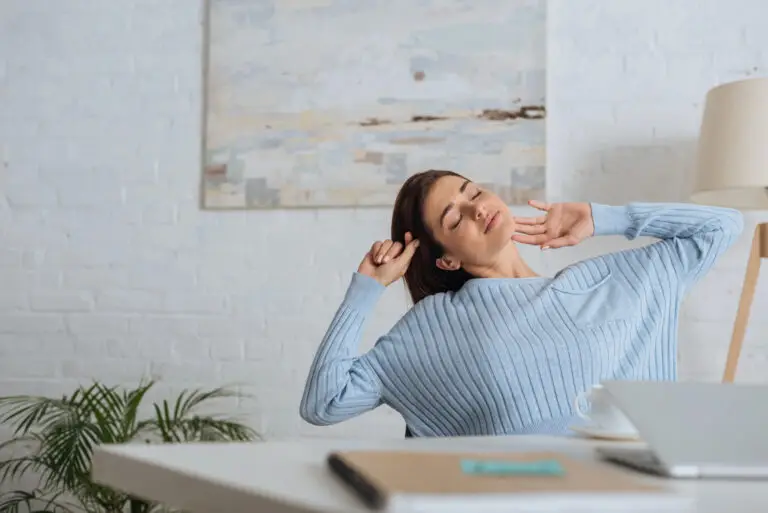
Over time, many of us become so practiced at holding everything together that tension begins to feel normal. The body adapts. Breathing changes. Creativity narrows. Movement becomes more controlled. Expression becomes more filtered.
Sometimes this happens so gradually that we barely notice it.
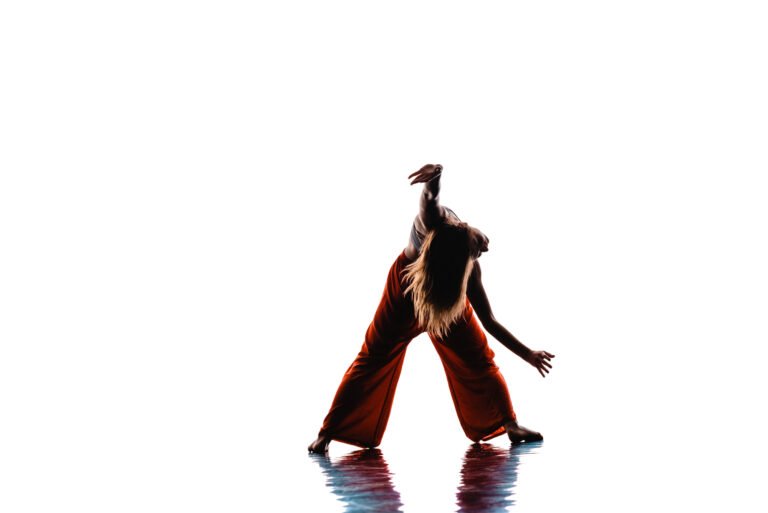
Much of my work has become an exploration of these patterns — and what becomes possible when awareness, movement, and expression are given a little more room to coexist. These themes sit at the heart of Soft Smile Somatics’ Whimsical & Wild series, which explores the relationship between awareness and expression through movement, somatics, creativity, and reflection.
Holding Isn’t the Problem
One of the things I appreciate about somatic work is that it shifts the conversation away from “fixing” ourselves.
Holding patterns are not failures. They’re often intelligent adaptations.
The body learns how to brace, contain, suppress, or stay hypervigilant for good reasons. Over time, though, those same protective strategies can become rigid. We lose flexibility. Expression starts to feel harder. Curiosity fades. Creativity becomes more performative and less instinctive.
In this work, we explore these dynamics through movement, breath, reflection, and simple somatic practices.
Not to force change.
Not to “break through.”
But to begin noticing:
Where do I naturally hold?
Where does movement already exist?
What changes when I stop managing myself so tightly?
Awareness and Expression
A central theme in this work is the relationship between awareness and expression.
In many contemplative and yogic traditions, awareness is not meant to pull us away from embodied experience. It’s meant to deepen our relationship to it.
That’s part of what interests me about the concept of Līlā, often translated as “divine play.” The idea points toward life as an ongoing interplay between structure and spontaneity, awareness and movement, witnessing and participation.
Rather than treating experience as something to completely control, Līlā invites a different question:
What happens when we participate more fully in the unfolding process itself?
That question feels deeply relevant in a culture built around optimization, performance, and constant self-monitoring.
The Nervous System and Creativity
There’s also a nervous system component to all of this.
Chronic stress tends to narrow perception and increase vigilance. When the system is overloaded, expression often becomes more constrained. Many people notice this during periods of burnout or overwhelm — writing feels harder, creativity disappears, movement feels disconnected, and even rest can become difficult.
Part of this work focuses on interoception, or the ability to sense what is happening internally. This kind of awareness helps build flexibility and responsiveness rather than automatic reactivity.
In practical terms, that can look like:
- noticing tension before it becomes overwhelming
- recognizing when the body wants movement, stillness, or rest
- staying connected to yourself while emotion, sensation, or creativity unfolds
This work is less about achieving a specific emotional state and more about increasing the capacity to remain present with experience as it shifts.
Why “Whimsical & Wild”?
People sometimes assume “wild” means chaotic or ungrounded.
That’s not how I think about it.
To me, wildness is closely connected to instinct — the ability to stay connected to what you genuinely feel without immediately overriding or editing it.
And whimsy is not about avoiding depth or seriousness. It’s about softening rigidity. Creating enough openness for curiosity, surprise, creativity, and experimentation to re-enter the room.
I think many adults have lost access to forms of play that are not tied to productivity or performance. This work intentionally creates space for exploration without requiring people to “do it right.”
There’s a line from Women Who Run With the Wolves that stayed with me while developing these ideas:
“The wild woman is not a creature of chaos, but of instinct.”
That’s wild.
A Different Kind of Practice
This work is not about becoming someone new.
It’s about becoming more aware of the ways you may have learned to disconnect from yourself — and experimenting with what happens when those patterns soften, even slightly.
We move between grounding and expression, structure and freedom, stillness and movement. There are opportunities for reflection, creativity, and embodied exploration within a supportive container.
Sometimes meaningful shifts don’t come from forcing transformation.
Sometimes they begin by simply noticing what has been held for a very long time — and allowing a little more space around it.